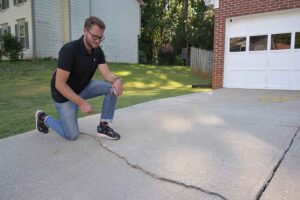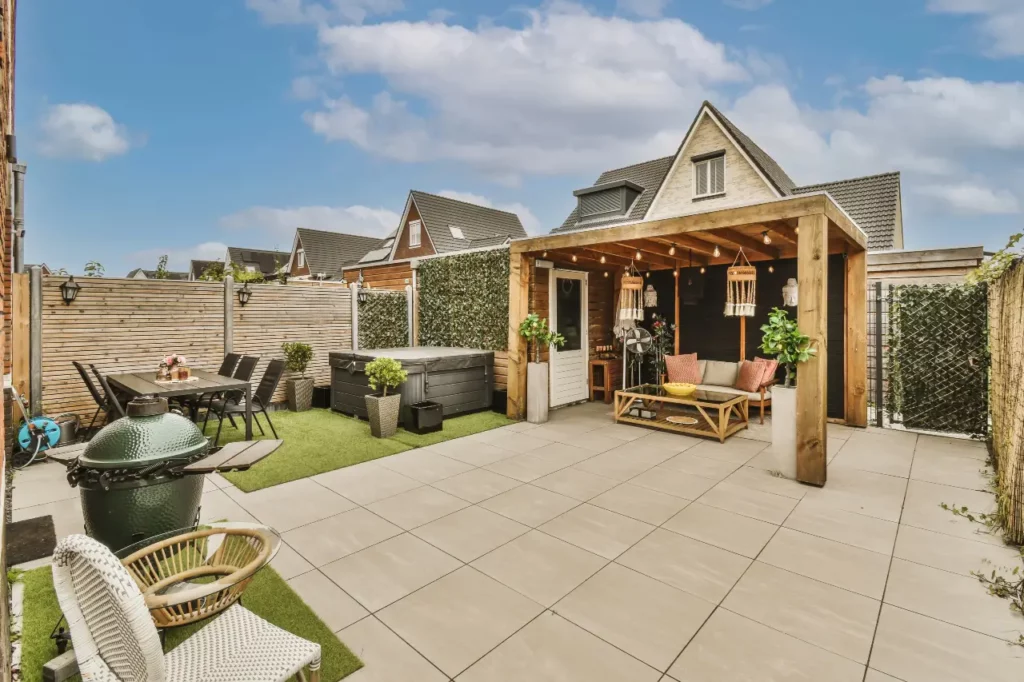
A concrete pool deck that has started to sink can often be lifted with polyjacking. The repair fills the empty space that has formed under the deck and can raise the slab back toward its original height. Whether it is the right fix depends on what has moved: the deck around the pool, or the pool itself.
What Are the Signs of a Sinking Pool Deck?
A sinking pool deck usually shows up as uneven concrete near the water’s edge. These signs can point to a deck that has lost some of the support underneath it:
- A gap opening between the deck and the edge of the pool
- One section of the deck that sits lower than the section next to it
- A raised edge where two sections meet
- Puddles that stay on the deck long after rain or swimming
- A spot that sounds hollow when you tap it
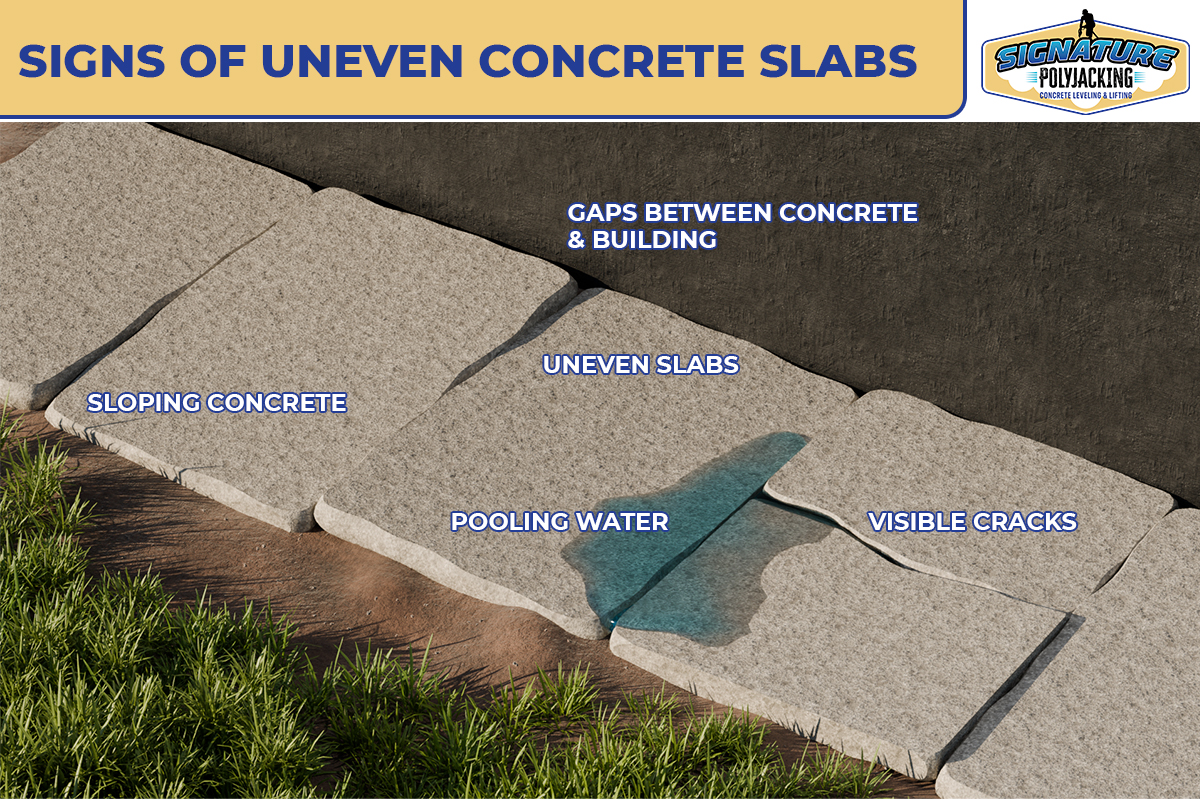
These signs do not always mean the deck has settled. Having the deck looked at can help confirm the cause before any work is planned.
Why Do Pool Decks Sink?
When a pool deck sinks, the cause is usually the soil or fill under the slab. The concrete itself is often still in good shape.
Water often plays a part around a pool. Water that runs into joints and under a slab can carry fine soil out with it over time. As that support is lost, the slab can crack, or one section can drop below the one next to it.
How Does Polyjacking Lift a Sinking Pool Deck?
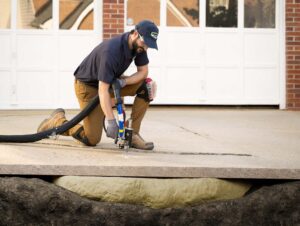
Polyjacking lifts a pool deck by injecting polyurethane under the slab through small holes drilled in the concrete. As the material expands, it fills the empty space beneath the deck and can raise it.
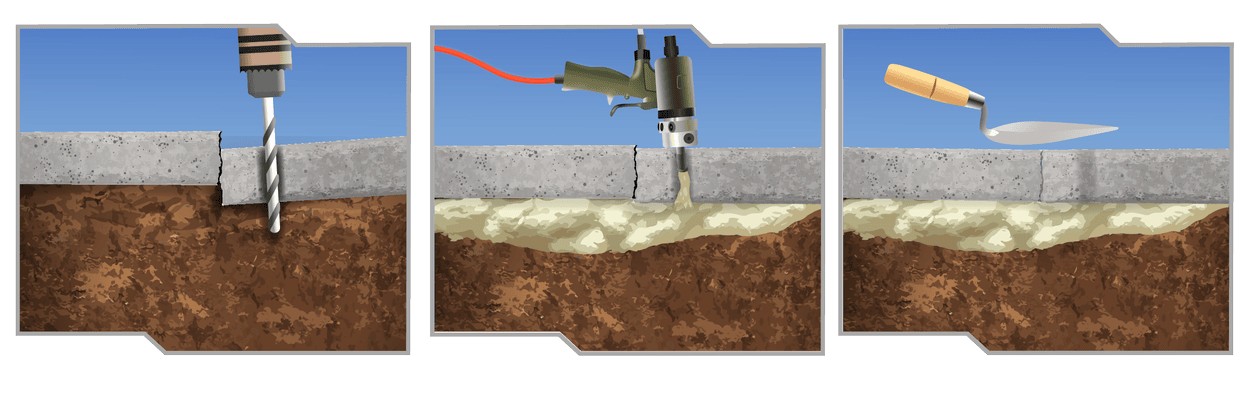
Signature Polyjacking uses the same foam injection process on pool decks that it uses on driveways, patios, and walkways. The existing slab stays in place, so the repair is usually far less disruptive than tearing out the deck. The holes are patched when the work is done.
Some decks have hollow areas that have not dropped yet. In those spots, the goal may be to fill the space under the slab and support it, even where there is little height to recover.
Is the Problem the Deck or the Pool?
Polyjacking lifts the concrete deck around a pool. The pool’s own walls and shell are a separate matter, and a pool professional is the right person to look at them.
Many slabs have an isolation joint, often called an expansion joint, that separates the slab from walls, steps, or other parts of a structure so each part can move on its own. Around a pool, that means the deck can move without the pool moving with it.
If the deck has dropped but the pool looks sound, pool deck leveling may be a good fit. If the pool’s walls or shell have cracked or shifted, that is a different repair.
Can Sealing Pool Deck Joints Help Prevent Water Intrusion?
Yes, sealing the joints in a pool deck can help limit how much surface water gets under the slab. Seals tend to work best when they are installed well and kept in good shape over time.
That matters around a pool, where the deck often gets wet from rain and splashing. Signature Polyjacking also offers concrete joint and crack sealing for decks like these.
What Results Can You Expect From Pool Deck Leveling?
Polyjacking can raise a settled deck closer to its original height and fill the empty space under it. It may not make the deck perfectly level. Signature Polyjacking cannot guarantee that the process will result in perfectly level concrete.
What Happens When You Ask for an Estimate?
An estimate is where you find out what is realistic for your deck. Signature Polyjacking will tell you what to expect before any work starts, and if the concrete is too damaged to lift, it will say so.
You can request an estimate for your pool deck. If you are still unsure where the movement is coming from, this guide to slab and foundation problems may help.