When Concrete Starts Talking, It’s Time to Listen
Concrete doesn’t complain the way people do. When it’s had enough, it doesn’t groan or shout, it sinks, cracks, leans, or separates. And if you live in Sandy Springs, you’ve probably seen a slab or two showing its age. That’s because our Georgia soil likes to expand, shrink, and generally act like it’s moody.
When homeowners call us, they usually say something like:
“My driveway just doesn’t look right…”
“My patio feels uneven…”
“That sidewalk slab keeps getting worse…”
And nine times out of ten, they’re dealing with one of the most common signs that their concrete needs leveling.
So today, we’re walking you through those signs, plain and simple, so you’ll know exactly when it’s time to fix the problem before it turns into an even bigger one.
Why Concrete Sinks Around Sandy Springs
Before we jump into the warning signs, it helps to understand why your concrete is sinking or shifting. In our area, it comes down to a few common issues:
- Clay-rich soil that swells when wet and shrinks when dry
- Erosion from heavy Georgia rain
- Improper compaction when the slab was first poured
- Tree roots lifting or pushing sections of the slab
- Washout around foundations or driveways
Any one of these can leave your concrete out of level. But the signs are usually easy to spot, if you know what you’re looking for.
Sign #1: Cracks That Keep Getting Bigger
Cracks are the concrete version of “Hey, something’s wrong down here.”
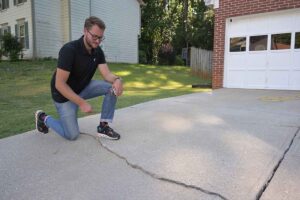
While small cracks aren’t always a big deal, cracks that widen, lengthen, or start to shift are almost always caused by uneven soil under the slab. That sinking or shifting soil puts pressure on the concrete, causing cracks that grow over time.
Watch for:
- Cracks that climb across the driveway
- Cracks on patios that widen each season
- Sidewalks cracking near the edges or joints
- Cracks that look like one side is higher than the other
If you’re stepping over cracks, or worse, catching your toe on them, you’re already past the point of waiting.
Sign #2: Sunken or Sloping Driveways
Your driveway should look like something you drive on, not something you ski on.
A sunken driveway is one of the most common issues we see in Sandy Springs. Soil erosion, water runoff, and heavy vehicle weight all play a role. If your driveway:
- Slopes sharply toward the garage
- Has noticeable dips or low spots
- Causes your car to lurch when backing out
- Pools water after rain
…then it’s likely time for concrete leveling.
Left alone, that sinking driveway can turn into worse cracking, water intrusion, or even damage to your garage foundation.
Sign #3: Tripping Hazards on Sidewalks and Walkways
If there’s one thing concrete loves doing, it’s creating tripping hazards at the worst possible times.
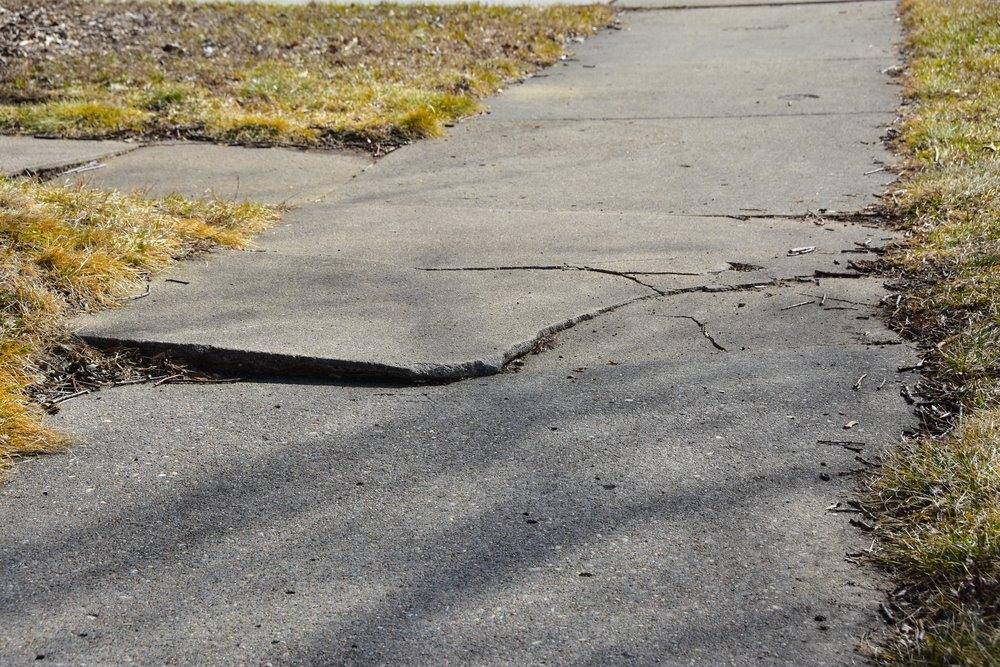
Uneven sidewalks are not only an eyesore, they’re a safety issue. And around here, tree roots plus soil movement mean sidewalks are always on the move.
Common signs:
- One slab sits higher than the next
- Gaps between slabs are widening
- Your toe catches on the same spot every time
If the mail carrier starts watching their step, it’s time to get it fixed.
Sign #4: Separation Between Your Slab and the House
This one is sneaky.
When a patio, driveway, or walkway starts pulling away from the home, it usually means the soil near the foundation is settling or eroding.
You might see:
- Gaps forming between concrete and brick
- The first inch or two of siding suddenly exposed
- A patio pulling away from your back door
This kind of separation isn’t just cosmetic, it can lead to water pooling along the house, causing foundation issues down the road.
Sign #5: Water Pooling Where It Shouldn’t
Water is supposed to run off your concrete, not settle on top like a birdbath. If you notice constant puddles, it’s often because a slab has dipped or settled unevenly.
Common areas:
- Driveway low spots
- Patio corners
- Pool deck edges
- Walkway dips
Standing water speeds up concrete damage and invites more soil erosion underneath. Leveling the slab restores proper drainage and protects everything around it.


Sign #6: Wobbly, Uneven Patios
A patio should be a place to relax, not a place where furniture rocks like you’re on a boat. An uneven or sunken patio can be caused by:
- Settled soil
- Poor initial grading
- Erosion from rain and runoff
- Heavy furniture or traffic
If chairs lean, tables wobble, or you feel like you’re walking uphill to get to the grill, your patio is telling you it needs leveling.
Sign #7: Sinking or Tilting Steps
Concrete steps are heavy. When the soil underneath gives way, they sink fast, and unevenly.
You’ll know your steps need leveling if:
- One side is noticeably lower than the other
- The steps slant forward
- Gaps appear between steps and the porch
- You have to “reach” your foot to make the next step
This is one of the most dangerous types of concrete settlement because people use steps every day. Fast leveling keeps your entry safe and solid.
Sign #8: Basement or Garage Floors That Aren’t Level
Sunken interior slabs often surprise homeowners, but they shouldn’t. Soil doesn’t care whether a slab is indoors or outdoors.
You might notice:
- Cracks inside your garage
- Sloping floors
- Doors hard to open
- Shelves or storage leaning
Leveling those slabs keeps the whole structure healthier and safer.
Why Concrete Leveling Is the Fix (Not Replacement)
When concrete settles, many homeowners think concrete replacement is their only option. The good news? Most of the time, it isn’t.
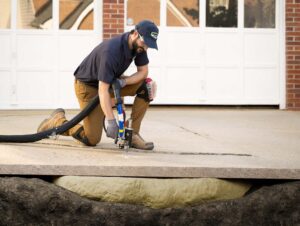
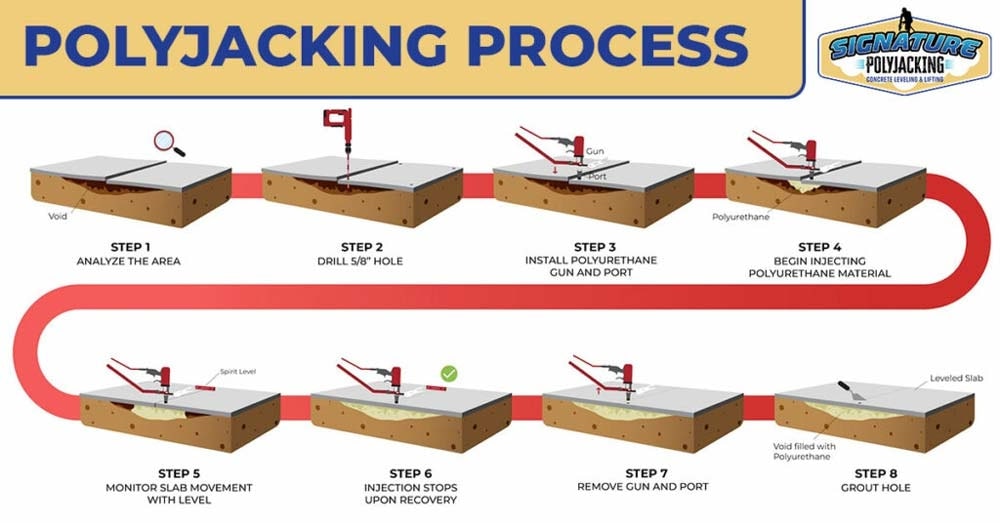
With concrete leveling (polyjacking):
- We drill small holes, about the size of a dime
- Inject high-density expanding foam
- Lift and stabilize the slab
- Seal the holes
- And you can use the surface again within minutes
It’s faster, cleaner, more cost-effective, and prevents the soil problems from getting worse. Replacement, on the other hand:
- Costs more
- Takes days or weeks
- Requires heavy demolition
- Doesn’t fix soil issues
- Often cracks again
If your slab is still structurally sound, leveling is almost always the better choice.

When to Call for Concrete Leveling in Sandy Springs
You don’t need to be an expert to know when something looks off. If you notice:
- Cracks getting bigger
- Slabs shifting
- Concrete pulling away from your home
- Water collecting where it didn’t before
- Steps sinking
- A wobbly patio or leaning walkway
…it’s time for an inspection. Catching the problem early keeps repairs simple, fast, and affordable.
Why Sandy Springs Homeowners Trust Us
We’ve lifted thousands of slabs across Georgia, and we know the area’s soil conditions inside and out. We use fast-curing, high-strength polyurethane foam that gives permanent stability with minimal disruption.
Our brand promise is simple:
- Honest assessments
- Fair pricing
- No mess
- No pressure
- Long-lasting results
Because concrete may settle, but you shouldn’t settle for bad repairs.
Let’s Take a Look at Your Concrete
If you think something’s off, even a little, we’re here to help.
We’ll inspect it, explain what’s going on, and walk you through your best options. No jargon. No scare tactics. Just the truth and a solid plan.
Contact Signature Polyjacking today for your free concrete inspection in Sandy Springs. Let’s get your surfaces level, safe, and looking like they should.